Monday, 10 August 2015

Part 1. Nanorobots will treat your deseases.

WHAT ARE NANOROBOTS AND WHICH DESEASES THEY CAN TREAT.

Imagine going to the doctor to get treatment for a persistent fever. Instead of giving you a pill or a shot, the doctor refers you to a special medical team which implants a tiny robot into your bloodstream. The robot detects the cause of your fever, travels to the appropriate system and provides a dose of medication directly to the infected area.

Surprisingly, we're not that far off from seeing devices like this actually used in medical procedures. They're called nanorobots and engineering teams around the world are working to design robots that will eventually be used to treat everything from hemophilia to cancer.

As you can imagine, the challenges facing engineers are daunting. A viable nanorobot has to be small and agile enough to navigate through the human circulatory system, an incredibly complex network of veins and arteries. The robot must also have the capacity to carry medication or miniature tools. Assuming the nanorobot isn't meant to stay in the patient forever, it also has to be able to make its way out of the host.

Properly realized, nanorobots will be able to treat a host of diseases and conditions. While their size means they can only carry very small payloads of medicine or equipment, many doctors and engineers believe the precise application of these tools will be more effective than more traditional methods. For example, a doctor might deliver a powerful antibiotic to a patient through a syringe to help his immune system. The antibiotic becomes diluted while it travels through the patient's bloodstream, causing only some of it makes it to the point of infection. However, a nanorobot -- or team of nanorobots -- could travel to the point of infection directly and deliver a small dose of medication. The patient would potentially suffer fewer side effects from the medication.

Several engineers, scientists and doctors believe that nanorobot applications are practically unlimited. Some of the most likely uses include:

Treating arteriosclerosis: Arteriosclerosis refers to a condition where plaque builds along the walls of arteries. Nanorobots could conceivably treat the condition by cutting away the plaque, which would then enter the bloodstream.

Breaking up blood clots: Blood clots can cause complications ranging from muscle death to a stroke. Nanorobots could travel to a clot and break it up. This application is one of the most dangerous uses for nanorobots -- the robot must be able to remove the blockage without losing small pieces in the bloodstream, which could then travel elsewhere in the body and cause more problems. The robot must also be small enough so that it doesn't block the flow of blood itself.

Fighting cancer: Doctors hope to use nanorobots to treat cancer patients. The robots could either attack tumors directly using lasers, microwaves or ultrasonic signals or they could be part of a chemotherapy treatment, delivering medication directly to the cancer site. Doctors believe that by delivering small but precise doses of medication to the patient, side effects will be minimized without a loss in the medication's effectiveness.

Helping the body clot: One particular kind of nanorobot is the clottocyte, or artificial platelet. The clottocyte carries a small mesh net that dissolves into a sticky membrane upon contact with blood plasma. According to Robert A. Freitas, Jr., the man who designed the clottocyte, clotting could be up to 1,000 times faster than the body's natural clotting mechanism. Doctors could use clottocytes to treat hemophiliacs or patients with serious open wounds.

Parasite Removal: Nanorobots could wage micro-war on bacteria and small parasitic organisms inside a patient. It might take several nanorobots working together to destroy all the parasites.

Gout: Gout is a condition where the kidneys lose the ability to remove waste from the breakdown of fats from the bloodstream. This waste sometimes crystallizes at points near joints like the knees and ankles. People who suffer from gout experience intense pain at these joints. A nanorobot could break up the crystalline structures at the joints, providing relief from the symptoms, though it wouldn't be able to reverse the condition permanently.

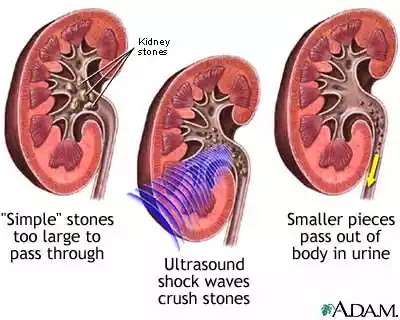
Breaking up kidney stones: Kidney stones can be intensely painful -- the larger the stone the more difficult it is to pass. Doctors break up large kidney stones using ultrasonic frequencies, but it's not always effective. A nanorobot could break up a kidney stones using a small laser.
Nanorobots might carry small ultrasonic signal generators to deliver frequencies directly to kidney stones.

Cleaning wounds: Nanorobots could help remove debris from wounds, decreasing the likelihood of infection. They would be particularly useful in cases of puncture wounds, where it might be difficult to treat using more conventional methods.



Source:-
http://electronics.howstuffworks.com/nanorobot.htm

Death of a Star.

Several billion years after its life starts, a star will die. How the star dies, however, depends on what type of star it is.

Stars Like the Sun

When the core runs out of hydrogen fuel, it will contract under the weight of gravity. However, some hydrogen fusion will occur in the upper layers. As the core contracts, it heats up. This heats the upper layers, causing them to expand. As the outer layers expand, the radius of the star will increase and it will become a red giant. The radius of the red giant sun will be just beyond the Earth's orbit. At some point after this, the core will become hot enough to cause the helium to fuse into carbon. When the helium fuel runs out, the core will expand and cool. The upper layers will expand and eject material that will collect around the dying star to form a planetary nebula. Finally, the core will cool into a white dwarf and then eventually into a black dwarf. This entire process will take a few billion years.

Stars More Massive Than the Sun

When the core runs out of hydrogen, these stars fuse helium into carbon just like the Sun. However, after the helium is gone, their mass is enough to fuse carbon into heavier elements such as oxygen, neon, silicon, magnesium, sulfur and iron. Once the core has turned to iron, it can burn no longer. The star collapses by its own gravity and the iron core heats up. The core becomes so tightly packed that protons and electrons merge to form neutrons. In less than a second, the iron core, which is about the size of the Earth, shrinks to a neutron core with a radius of about 6 miles (10 kilometers). The outer layers of the star fall inward on the neutron core, thereby crushing it further. The core heats to billions of degrees and explodes (supernova), thereby releasing large amounts of energy and material into space. The shock wave from the supernova can initiate star formation in other interstellar clouds. The remains of the core can form a neutron star or a black hole depending upon the mass of the original star.

Quantum batteries could allow for super-fast charging thanks to entanglement .

Quantum batteries could allow for super-fast charging thanks to entanglement

As mobile devices get more powerful, they also burn through batteries at an ever increasing rate. Capacities have been inching upward over the years, but one of the biggest improvements has been fast-charging technologies like Qualcomm’s Quick Charge 2.0 and Oppo’s VOOC. However, physicists have discovered a way that future batteries could charge at warp speed by leveraging quantum entanglement.

You’re probably familiar with quantum bits (qubits) to some degree from all the news about quantum computing in recent years. Unlike regular digital bits, a qubit can be in either of two states or both states at the same time. Physically, the qubits can be any number of particles including photons, ions, and neutral atoms. In the case of a quantum battery, the qubits are referred to as work qubits (amusingly nicknamed “wits”) because they are used to store energy that can later be extracted to perform work. Each wit has a high-energy state and a low-energy state. Add power to the system, and you flip wits to the high-energy state to store energy.

The trick to getting super-fast charging times out of a quantum battery is that all of these wits can (theoretically) be entangled during the charging process. Conventional battery charging is limited by thermodynamic processes as the electrons flow in, but two entangled wits can bypass most of this. If two particles are entangled, they will share the same quantum state even if they aren’t in the same physical space. In this case, that state is storing energy. The researchers say this means the wits can be charged “globally” for a huge increase in speed. In fact, the charging speed is proportional to the number of wits in a battery. If a quantum battery with one work qubit takes an hour to charge, one with six wits would only take 10 minutes.

This is still only a theoretical model of a battery, though. There are several issues with actually implementing a design that takes advantage of entanglement. Perhaps the biggest issue is that non-fluid quantum systems are very hard to maintain for even short periods of time. Certainly nothing approaching the amount of time it takes to charge a battery, even at the vastly increased speed claimed in the paper. This is an effect of decoherence, basically interference from outside the quantum system. Researchers also need to find a way to get the energy out of a quantum battery in a useful way rather than just as radiant heat.

It’s going to take a lot more research to make quantum batteries that utilize entanglement to speed up charging a reality. For the time being, you’ll have to put up with boring old non-entangled batteries.


Source:-
http://www.extremetech.com/extreme/211580-quantum-batteries-could-allow-for-super-fast-charging-thanks-to-entanglement#disqus_thread

Sunday, 9 August 2015

How aeroplane fly?

Flight requires two things: thrust and lift.

Thrust

Thrust is the forward motion provided by a propeller or jet engine.

Lift on an aeroplane wing

The shape of the aeroplane wing is peculiar. Its upper surface is
more curved than its lower surface and its leading edge is thicker than its trailing edge. As an aeroplane moves forward, the air blown in the form of stream lines over the wings of aeroplane is shown below.
As the upper surface of wing is more curved than its lower surface, therefore, the speed of air above the wings two is larger than the speed of the air below the wings. According to Bernoulli’s theorem, the pressure above the wings becomes less than that the pressure
below the wings. Due to this difference of pressure on the two sides of the wings, a vertical lift acts on the aeroplane. When this lift is sufficient to overcome the gravity pull on the aeroplane, the aeroplane is lifted up.

Drag

Two forces work against flight: drag and gravity.
A wing has to be designed not only to produce lift, but also to minimize the friction with passing air, which causes drag.
Every airplane has a specific takeoff speed, where lift overcomes gravity. That critical speed changes based on how much weight a particular flight packs. The planes propeller or jet engine, meanwhile, has to work to provide enough thrust to overcome drag.

Pilots can make minor adjustments to the wing flaps, effectively changing the wing's angle into the wind. A more tilted wing allows more lift to be created at a lower speed.

THE EARTH DOESN’T ACTUALLY ORBIT THE SUN?

You were taught that Earth and other planets in our solar system orbit the sun, and that our solar system orbits the center of the Milky Way. Is it possible that your science teacher had it wrong? Is everything you’ve learned about physics and gravity incorrect?
THE EARTH DOESN’T ACTUALLY ORBIT THE SUN?
Let us first start by saying that for all practical purposes, what you were taught isn’t entirely wrong. The Earth does in fact orbit the sun. In the strictest sense, however, it doesn’t.
“But how can this be?”, you might ask. It’s been tested, verified and is common knowledge. It’s one of the first science lessons taught to kids in in grade school. How can our fundamental understanding of the solar system be wrong? Well, it’s actually due to a technicality.
Everything that has mass has gravity. The more massive something is, the more gravity it has.
The sun and other planets all each have their own “gravity well” which interact and pull on one another. Because there are several different gravity wells interacting with each other, it means that everything in an orbital system (like our solar system) orbit the center of mass of the system. This center of mass of the system is called the barycenter.
The Earth, the sun and everything else in our solar system actually orbit this barycenter – not the sun.
"The center of mass of our solar system very close to the Sun itself, but not exactly at the Sun's center."
Right now, the barycenter is just outside the Sun's surface. But it's constantly changing depending upon where the planets are in their orbital paths.


Source:-
http://zidbits.com/2011/09/the-earth-doesnt-actually-orbit-the-sun/

Magnus Effect (Curve path by spinning ball).

Magnus effect

The Magnus effect is the commonly observed effect in which a spinning ball curves away from its principal flight path.

The Magnus effect is a lift force of tremendous importance to all athletes who want to bend the flight of a ball.

Golfers, baseball pitchers, and soccer, tennis, and table tennis players all employ this effect to curve the flight path of the ball. The game of baseball in particular is made more fascinating by the Magnus effect.

The Magnus effect operates in the following manner.

As a spinning ball moves through the air, it spins a boundary layer of air that clings to its surface as it travels along. On one side of the ball the boundary layer of air collides with air passing by. The collision causes the air to decelerate, creating a high-pressure area. On the opposing side, the boundary layer is moving in the same direction as the air passing by, so there is no collision and the air collectively moves faster. This sets up a low-pressure area. The pressure differential, high on one side and low on the other, creates a lift force (the Magnus force) that causes the ball to move in the direction of the pressure differential (i.e., from high to low).

The Magnus effect can combine with the force of gravity or fight against gravity.

The Magnus effect can be applied in any direction, and in this way an athlete can create backspin, topspin, and sidespin. Soccer players are well known for the way they use “banana kicks” (i.e., the Magnus effect) to curve free kicks and corner kicks around defenders and into the goal mouth. Tennis players and volleyball players use the Magnus effect when they apply topspin to make the ball drop suddenly while in flight.

Saturday, 8 August 2015

Why windows explode, rather than implode in hurricanes?

Bernouilli's principle tells us why windows tend to explode, rather than implode in hurricanes: the very high speed of the air just outside the window causes the pressure just outside to be much less than the pressure inside, where the air is still. The difference in force pushes the windows outward, and hence explode. If you know that a hurricane is coming it is therefore better to open as many windows as possible, to equalize the pressure inside and out.

Cholesterol?

What Is Cholesterol?

Cholesterol is not the same as fat. If you had a bit of cholesterol on the end of your finger, it would look like wax. The liver manufactures cholesterol and sends it out to other parts of the body for the production of hormones and cell membranes. Based on the results of the Framingham Heart Study and other research, the ideal cholesterol level is below 150 mg/dl.

Different Types of Cholesterol

When cholesterol is transported in the bloodstream, it is packed into low-density lipoproteins (LDL), sometimes called the “bad cholesterol” and high density lipoproteins (HDL) sometimes called the "good cholesterol" Although LDL is necessary in limited quantities (LDL delivers cholesterol to various parts of the body), a high LDL cholesterol level can dramatically increase your risk of a heart attack.

How to Lower Your Cholesterol

People can reduce their cholesterol levels dramatically by changing the foods they eat.
Decrease Cholesterol Intake Since our bodies make plenty of cholesterol for our needs, we do not need to add any in our diet. Cholesterol is found in all foods that come from animals: red meat, poultry, fish, chicken, eggs, milk, cheese, yogurt, and other dairy products. All animal products should be avoided for this reason.

No foods from plants contain cholesterol, since plants do not have a liver to produce it.

Decrease Fat Intake, Especially Saturated Fats Keeping total fat intake low is an important way to lower cholesterol and reduce the risk of other chronic diseases.

Animal products also contain saturated fat, which causes the liver to produce more cholesterol.

Heart attack and Bernoulli's principle.

Blood Flow and Heart Attack

Bernoulli’s principle says that the sum of potential,kinetic and pressure energy per unit mass of a incompressible,non viscous fluid remains constant.

Bernoulli's Principle states that the faster a fluid moves, the lower the pressure of the fluid.

Bernoulli’s principle helps in explaining blood flow in artery. The artery may get constricted due to the accumulation of plaque on its inner walls. This happens because of high cholesterol intake. In order to drive the blood through this constriction a greater demand is placed on the activity of the heart.

We know if the cross sectional area decreases, the velocity of the blood will increase.

The speed of the flow of the blood in this region is raised which lowers the pressure inside and the artery may collapse due to the external pressure. The heart exerts further pressure to open this artery and forces the blood through. As the blood rushes through the opening, the internal pressure once again drops due to same reasons leading to a repeat collapse. This may result in heart attack.

Thursday, 6 August 2015

Why the humid climate is unbearable?

Because our bodies need to disperse heat, and they can’t do that effectively when the air temperature is close to our body temperature or air is humid. Our muscles and metabolism generate heat continuously.

We transfer that heat into our surroundings by sweating, exhaling warm air, and circulating blood near the surface of our skin to cool. When the temperature gradient (or difference) between the body and the air is high, heat flows easily from us into the environment, and we cool down.
But when the weather hovers around our internal temperature, our inner swelter lingers, and we feel hot and uncomfortable. Humidity makes things worse by interfering with the vaporization of sweat, one of the human body’s main cooling mechanisms.

By the same token, frigid weather draws the heat from our bodies faster than we can produce it, and our core temperature falls. A person’s thermal comfort, or satisfaction with the temperature of the environment, depends on factors as varied as metabolic rate, body fat, and age.

For instance, those with heavier builds have a lower ratio of skin surface area to mass—they evaporate heat less efficiently than the small-framed. And fat absorbs warmth readily, making the obese more susceptible to heat stress. Other groups shown to be especially sensitive to hot weather include pregnant women, the disabled, and people younger than 14 or older than 60. (The body’s effectiveness at thermoregulation declines with age.)


Source:-
http://www.slate.com/articles/news_and_politics/explainer/2012/07/my_body_temperature_is_98_6_degrees_so_why_is_98_6_degree_air_unbearable.html

Wednesday, 5 August 2015

Humidity

What Is Humidity?

Ever heard the phrase 'It's not the heat, it's the humidity'? People say this because humidity, which is the amount of water vapor in the air, can make hot temperatures even more unbearable than they already are. Humidity is actually a broad term, and we can describe different types of humidity in different ways.

Humidity is an important thing to understand because it affects both weather and climate as well as global climate change. Humidity also affects indoor environments, so understanding it can help you determine the best place to store your books, clothing and other important items in your house.

Relative Humidity

You've probably heard about relative humidity in weather reports. This is the amount of water vapor in the air relative to what the air can hold. Think about it this way: if you have a cup that is half-full of water, the cup contains 50% of what it can hold. Air works the same way.

Let's say that a certain parcel of air can hold 30 grams of water vapor per cubic meter of air, but it only has 15 grams of water vapor per cubic meter of air. We simply divide the amount of water present by the amount of water possible, so 15 divided by 30, and then multiply it by 100 to get a percent. So in this case, 15 / 30 = 0.5, multiplied by 100 gives us 50%. So the relative humidity is 50%, which means the air contains about half of the total water vapor it could possibly hold.

It's important to know that warm air can hold more water than cold air. You can think of different temperature air like different size cups: smaller cups hold less water than larger cups, right? In this case, cold air is a smaller cup and warm air is a larger cup. So when the air is colder, the same amount of water vapor will produce a higher relative humidity than the same amount of water vapor in warmer air. This is because we have to consider the amount of water vapor relative to what the air can hold.

Let's look at an example. You have two cups, one that can hold a maximum of 12 ounces and one that can hold a maximum of 24 ounces. Now put six ounces of water in each cup, and you'll notice that the smaller cup is fuller than the larger cup, even though they have the same amount of water in them.

There are 6 ounces of fluid in the 12-ounce cup, so 6 / 12 * 100 = 50%. There are 6 ounces of water in the larger cup as well, but this cup can hold a total of 24 ounces. So, 6 / 24 * 100 = 25%. If the 12-ounce cup represents cold air and the 24-ounce cup represents warm air, the relative humidity for the cold air is 50%, but for the same amount of water in warm air, the relative humidity is only 25%.

How full the cup is relates to how much the cup can hold overall. When we apply this to air, we can see that for the same amount of water vapor, the relative humidity will be higher for cold air than for warm air because the cold air is 'fuller' from the same amount of water.

Dew Point

When air becomes saturated, this means that it contains the maximum amount of water vapor possible. Just like relative humidity differs with different air temperatures, saturation is also temperature-dependent.

Remember our cups from before? Saturation occurs when the cups are completely full of water. Just like the smaller cup needs less water to become full, cold air becomes saturated from less water than it takes to saturate warm air. And just like if you kept filling the cups even though they were already full, the water would have to go somewhere, so it would spill out over the cup and fill the surrounding area.

Dew is when water condenses at ground level because the air is saturated. Just like the water spills over the side of the full cup, when air is saturated, the excess water 'spills over' and builds up on leaves, cars, buildings or anything else that is surrounded by the saturated air.

Therefore, the temperature at which saturation occurs is called the dew point. You most commonly see dew in the morning because air temperature goes down ove


Source:-
http://study.com/academy/lesson/what-is-humidity-definition-measurements-effects.html

Artificial rain

What is nucleation?
How does rain happen in nature?
As wind passes over the sea, it collects evaporating water as very, very tiny drops. As the wind rises high in the air, temperatures become very cold, causing some of these drops to merge. This bigger drop attracts more drops of water, and so on and on. This process is called nucleation.
When the water drops become about 0.1 mm thick, they cannot float in the air anymore. They then fall to the ground as rain.
Artificial rain
Sometimes it does not get cold enough in the cloud for nucleation to occur. But if we want the cloud to rain, we have to create places where nucleation can occur. This is done by a method called cloud seeding.
Tiny particles of silver iodide are sprayed on a cloud from an aeroplane. Sometimes, solid carbon dioxide (called dry ice) is used, as it is cheaper. The particles attract water drops from the cloud. When they form a drop that is large enough, it starts raining. You can read more about cloud seeding here.
Environmental effects
Artificial rain has a few unintended consequences. The use of silver iodide means that there is a lot of silver that also rains over the landscape. If cloud seeding is done for many years in a place, this silver begins to accumulate in plant and animal bodies. Too much silver in the body leads to a condition called argyria. In this, the skin and eyes get a bluish hue.
Silver iodide is a hazardous chemical, and can cause anaemia, weakness and loss of weight. Hence the worker must be completely protected when handling silver iodide.


Tuesday, 4 August 2015

Gold Leaf Electroscope

What is a Gold Leaf Electroscope?

Gold leaf electroscope is an instrument used to test the presence of charge on a body. It works on the principle that like charges repel each other.

The gold leaf electroscope has a very very thin piece of gold foil (called gold leaf) fixed at the top to a piece of copper.
The copper has a large round top, called the cap. The whole thing is put inside a glass case, to stop air blowing the delicate gold leaf around.

The piece of copper goes through insulation in the top of the glass case, so that any charge on the gold leaf cannot escape.

Charge can be transferred to the electroscope by wiping the charged object across the cap. The charge flows over the conducting copper and gold, and the gold leaf rises up because it is repelled by the same charged copper rod.


http://www.gcsescience.com/pse4-electrostatic-gold-leaf-electroscope.htm

Temperature Scales


Source:- Science visual resources Physics by Chelsea House Publishers

Why dead bodies float on the surface of water after some days?

Immediately after death, water enters the lumen in the body and the body becomes denser and sinks. Later after a few hours, the various protein and lipid matter in our body undergo oxidation/decay to release gases which accumulates thereby pushing out water due to which the dead bodies float.

Monday, 3 August 2015

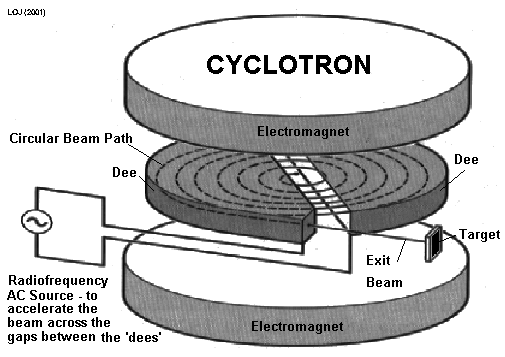
Cyclotron

HOW WE SEE THE THINGS OR PERSONS MOVING IN A MOVIE?

Persistance of vision is the property of vision due to which the sensation of image formed on retina of our eyes persists in our brain for 1/10 sec. If any other image is formed on retina before that then we are unable to differentiate between those images.
This property of vision is called persistance of vision.

Persistence of vision is the commonly used term to describe the optical illusion whereby multiple discrete images blend into a single image in the human mind and believed to be the explanation for motion perception in cinema and animated films.

Here are 9 still pictures of a man riding on the horse. When these pictures are run fast continuously with a speed greater than 16 frames/sec then the effect is as shown in gif image.

Sunday, 2 August 2015

How does a Photocopier work?

How does a Photocopier work?

How is Electrostatic Charge used in a Photocopier?

A photocopier uses electrostatic charge to produce a copy.

The original (the page you want copied) is placed onto a sheet of glass.
An image of this page is projected onto a positively charged drum.

The drum has a coating that conducts electricity when light falls
on it. The parts of the drum which are lit by the projected image
lose their electrostatic charge when they start to conduct.

A black powder(called toner) is negatively charged.
The toner is attracted to the positively charged parts of the drum.
The drum rotates and rolls against a piece of copier paper.
The toner is transferred from the drum to
the paper making a black and white image of the original.

Finally, the paper is heated by passing it between heating drum which makes the toner stick to it. This is called "fixing" the image.
When you use a photocopier you can feel that the copier paper is still warm.

SHARK SHIELD (POD)...

Shark Shield (originally known as "Protective Oceanic Device" or simply "POD") is a portable electronic device that emits an electromagnetic field and is used by scuba divers, spearfishing, ocean kayak fishing and surfers to repel sharks.

The SHARK POD generates an electrical field that is detected by the shark through its sensory receptors, known as the Ampullae of Lorenzini, found on the snouts of all predator sharks.

Once detected by the sharks' sensors, the field causes muscular spasms that result in the shark being repelled from the area.

Amazing Facts of Physics

1). Diamonds can be made from graphite by applying a temperature of 3000 Celsius and pressure as high as 100,000 atm.

2). One of the most amazing & interesting fact about Physics on earth is “The Dead Sea”, which is known for its density due to the presence of salt, as a result of which you can easily float on it without drowning, so one can always claim to be a swimmer there.

3). The flashing lightning bolt is 3 times hotter compared to the sun, seems like the sun also has to face competition.